Nonprofit auctions add an element of excitement to your fundraising events while also bringing in more money for your cause. Most items in a nonprofit auction are donated by individuals or organizations. It is up to the nonprofits to procure the items for their auctions, which can sometimes be challenging and time-consuming. The effort is worth it as it will help bring more people to your event and boost non-auction giving.
Luckily, with the right process and resources nonprofits can set themselves up for successful auction item procurement. This article outlines best practices for collecting items donated to your nonprofit auctions. We cover how to get started, where to look, and the best ways to communicate with potential donors.
Select Auction Items That Will Be Popular With Your Audience
The first step to a successful nonprofit auction is having items available that are exciting to your audience. No two nonprofit audiences are the same, and it is important to understand who your supporters are and what makes them tick. This will best prepare you to decide what types of items will do best at your auctions. For example, if you are an environmental organization and your supporters are largely outdoorsy active people, consider sporting goods and outdoor gear items.
Come Up With a Wish List of Auction Items
Once you know what your audience will like, come up with a list of auction items. Have a mix of items at different price levels. Again, you know your audience and their capacity so make sure that the items are within the price range they are willing to bid on. When building your wishlist, think of items that range from experiences (concert tickets, sports games, lessons) to luxury goods (jewelry, handbags), to one-of-a-kind items (local art, etc.).
How to Find One-of-a-Kind Auction Items
Most nonprofits don’t want your run-of-the-mill auction items. They want items that are unique to their organization or location and also something that will excite their guests. It can be a challenge to think of exciting items that will stand out and be unique. The best way to find one-of-a-kind items is to think locally and reach out to your network.
Seek Inspiration Within Your Organization
People are at your event because they care about your cause. Take a look internally and think about unique items that can come directly from your organization. For example, if you are an organization focused on children you could feature artwork by the kids you support. Or, if you are an environmental organization you might offer a camping expereince at your preserve or a piece of artwork or furniture made from a tree on the property. Think about what makes your organization unique to help you come up with creative ideas.
Look Locally
Depending on your location, there are lots of possibilities for unique local items. If you don’t know where to start, take to Google or social media to search for creatives or unique professionals in the area. Think photographers, artists, classes, experience bundles (B&B stay and Restaurant Gift Card), gift baskets from local stores, etc. The more local you go, the more unique and personal to your cause your auction items will be.
Reach Out to Your Network
Your network of supporters is a great opportunity to find unique items relevant to your cause. It is likely your board members, volunteers, staff, major donors, etc. have similar interests as those who support you. Connect with them and find out if they have any ideas or connections for unique items. Also, find out if they, or anyone they know have a special skill that might be a fun item to auction off. For example, is there a tennis coach in your network willing to give lessons? Or an artist willing to do custom pet portraits? Do you know anyone employed by your local sports teams with access to tickets/memorabilia? Unique experiences from people in your network are going to do well in your nonprofit auctions.
Assemble a Committee and Find Volunteers
Reaching out to all of your prospective donors is a time-consuming process. Many nonprofits choose to have an entire committee dedicated to finding auction items. If your nonprofit has the people and resources available, consider assembling a committee. It is a plus if your committee members have a network of people and organizations they are willing to reach out to to ask for items.
Set Up a Tracking System for Outreach
You will thank yourself later if you stay organized from the beginning. Consider utilizing shared tracking documents so you can stay on top of who is doing what. Start with your wishlist, then add potential donors to each item, and track how they were contacted (phone, email, follow-up, etc.). That way when a volunteer/committee member/staff member reaches out to an organization you know when.
You will also want to stay on top of pick up/drop off of items. So make sure you connect with your team on who will be picking up what items or what times items will be dropped off at your location. Specify these details in your procurement letter and donation forms.
Start Soliciting Auction Item Donations
Once you have your wish list and your team you can start reaching out to organizations and individuals for donations. You should put together an auction item procurement letter with a donation form attached. Below find a sample letter and a template for a donation form.
Keep in mind that if you have a request for a specific item or dollar amount from an organization, ask them specifically for what you are looking for. The template letter offers a broader approach, but decipher what is best for your organization and tailor the letters to each organization you reach out to.
Sample Auction Item Procurement Letter
Dear [Donor’s Name],
Subject: Request for Auction Item Donation
My name is [Your Name] and I am a/the [Your Connection to the Organization, eg. Volunteer, Board Member, Office Manager..] at [Your Organization’s Name]. We are excited to announce our upcoming [Event Name], which is scheduled to take place on [Event Date] at [Event Venue]. As we gear up for this much-anticipated event, we are reaching out to businesses and individuals in our community to request support through the donation of auction items.
[Your Organization’s Name] is a [brief description of your organization, its mission, and any relevant achievements]. Our commitment to [cause or purpose] has allowed us to [mention any impact or success stories].
The success of our fundraising events relies heavily on the generosity of our community partners, and we believe that your contribution could make a significant difference. We are seeking donations for our live and silent auctions, which are key components of our event. Items that tend to attract attention and garner enthusiastic bidding include [provide examples, such as unique experiences, travel packages, exclusive merchandise, etc.].
If you choose to support our cause through a donation, [Your Organization’s Name] will ensure that your generosity is recognized prominently at the event. This recognition may include mentions in our event program, on our website, and through various social media channels.
To facilitate the process, our team is available to pick up the donated item(s) at your convenience. Alternatively, you may also deliver the items to our office at [Your Organization’s Address].
If you have any questions or require additional information, please feel free to contact [Your Contact Person] at [Your Contact Person’s Email Address] or [Your Contact Person’s Phone Number].
Thank you for considering our request, and we look forward to the possibility of collaborating with you to make [Event Name] a tremendous success.
Sincerely,
[Your Name] [Your Organization’s Name]
What to Include in Your Auction Item Donation Form
When sending out your request letters you should also put together a donation form to accompany the letter. Consider including the following fields in your donation form:
Full name or organization name Item description: A brief yet detailed description of the donated item or service. Estimated value: The perceived value of the item, which can help in setting starting bids or reserve prices. Delivery preference: Whether the item will be delivered to the organization or picked up by the organization’s team. Specific instructions or restrictions: Any special instructions or restrictions related to the item, such as expiration dates, usage limitations, or delivery considerations. Recognition preference: How the donor wishes to be recognized (e.g., by name, as a company, a specific title, or anonymous). Acknowledgment: A statement affirming the donor’s understanding that the organization is a registered nonprofit and that the donation is voluntary without the expectation of goods or services in return. Signature: A space for the donor to sign and date the form. Additional Comments/Notes: A section for any additional comments, notes, or specific details about the donation. Instructions on where and when to return the form along with the donated item. Contact information: Information for reaching out in case the donor has questions or needs assistance.
Send a Thank You Post Event
Once an organization becomes a donor to your cause, you will want to maintain a relationship with them. Sending a heartfelt thank you after your event is one of the most important steps you can take to steward your auction item donors. Include information about how successful the event was thanks to their support and make it clear they were an integral part of the evening’s success.
Silent Auction Donation Request Sources
In addition to reaching out to local businesses, many larger organizations will also donate. Many well-known brands accept requests for in-kind donations to nonprofit auctions. If you have a specific brand or organization in mind a simple Google search of “brand” and kind donation request forms should help point you in the right direction. Below is a list of some organizations we have found that donate items to nonprofit organizations to help you get started:
Other Ideas (Local): Consider reaching out to local businesses or search them by name and in-kind donations. Many local venues, hotels, clubs, etc will offer InKind donations to local nonprofits.
Incorporating nonprofit auctions into your fundraising events not only adds excitement but also serves as a powerful avenue to raise essential funds for your cause. As highlighted in this article, the process of securing the right items for your auction can be both time-consuming and challenging, but with the right strategies and resources, nonprofits can set themselves up for successful item procurement. The effort is also worth it or the additional funds and traffic it will bring to your nonprofit event.
Remember, the success of your nonprofit auction relies on the generosity of your community and supporters. Approach the procurement process with enthusiasm, a clear strategy, and a focus on building lasting relationships with your donors. Best of luck with your fundraising efforts!
Hosting a nonprofit event isn’t just about the big day; a well-done event can have lasting impacts on your donor’s overall support of your organization. A strong post-event engagement strategy will maximize the benefits of your event.
This article will cover best practices for keeping your audience engaged well after your event has ended.
Ensure the close of your event goes smoothly
If you are running an auction at your event, you can avoid the hassle of a chaotic checkout with auction management software like AuctionSnap. Guests can easily check out and pay from their phones and receive a receipt right in their inbox. This minimizes the need for long checkout lines at the end of your event. Wrap up all of your paperwork and administrative work at the close of your event so you are not scrambling the following weeks trying to send out receipts and follow up with auction winners.
Send out a thank you to all attendees ASAP
If you have saved some time by closing out your auctions, you can get right to the important task at hand of thanking your guests. Consider sending out a heartfelt thank you on multiple platforms. If you can, a handwritten card and direct mail have a more personal feel. However, if this is not in your organization’s time or budget you can create thank you emails in your CRM. If you are going this route consider segmenting your guests and giving them personalized letters. This will be more time effective but still offer that personalized touch donors crave.
Sample Thank You Letter to Nonprofit Event Attendees
Dear [First],
Thank you so much for joining us at our annual gala. Your presence at the event signifies your commitment to our organization, and we want you to know how much it means to us. It was truly a joy to be surrounded by individuals like yourself who form the heartbeat of our organization.
This year, thanks to the generosity of supporters like you, we are thrilled to announce that we successfully raised a total of [dollar amount]. These funds will be directed towards [allocation of funds], contributing significantly to the advancement of our mission and initiatives.
Once again, thank you for being a vital part of our gala and for contributing to the continued success of our organization. We look forward to your continued involvement and hope to see you at future events.
Warm regards,
[Signature]
[Organization Name]
Create a public thank you
In addition to thanking your attendees, create a public thank you to share with your social media channels. Try to do this as soon as possible, such as the next morning while your event is still top of mind for most attendees. This will help you see more engagement on your social media posts. Include a thank you to everyone who attended, as well as event recaps and what was raised in total. Use this as an opportunity to rally excitement with your entire audience. This can help create a sense of FOMO (fear of missing out) for those who did not attend and can help drive up attendance at your next event.
Collect feedback and recap with your team
Your nonprofit events should serve and inspire your audience. It never hurts to send out a short post-event survey to see how participants felt about the event. Use this as an opportunity to learn more about what they would like to see more or less of at your next event. Also connect with volunteers, your staff, board members, and other key stakeholders to discuss the evening. Take detailed notes about what worked and what didn’t. Make note of vendors and logistics, so that planning your next event goes smoother. For example, if you shopped around and found a great caterer for your event – keep note of their contact information so you can use them in the future.
Express Gratitude to Your Team
Lastly, always express gratitude to your team and volunteers. They’ve put in a tremendous amount of effort, and their dedication made the event a success. Make sure to thank them and give them the recognition they deserve for pulling your event together. If you have time and the budget for it, a simple celebratory coffee and donut morning can be a great way to thank your team, reconnect, and recap.
Final Thoughts
At the close of your nonprofit events, take time to create a thoughtful follow-up to ensure lasting engagement. The days after your event your audience is still buzzing from the excitement, so take this opportunity to thank them and get their feedback. Always take time post-event to recap with your team to ensure your next event is better than the last. And never forget the power of a heartfelt thank you to both your supporters and your team, since they are the reason behind your event’s success.
Nonprofit Auction Software is designed to take the hassle out of running nonprofit auctions. While auctions can be a great addition to your nonprofit events, the amount of paperwork, prep work, and follow-up can leave your team stretched for time.
Tools like AuctionSnap were designed to tackle common problems that come along with running a nonprofit auction. Below find some of the most frequent issues that come up at nonprofit auctions and how AuctionSnap provides a simple solution!
How do you build excitement for your nonprofit auction items?
At a traditional auction, your event attendees would either see the auction items displayed on tables at the event or have a catalog of auction items. If they don’t see the items before the event, there isn’t much time to build up excitement around your auction. Some people may not even see all your items. On the other hand, creating and printing an auction catalog can be costly and time-consuming.
AuctionSnap Solution: Promote Your Items Early Through a Custom URL
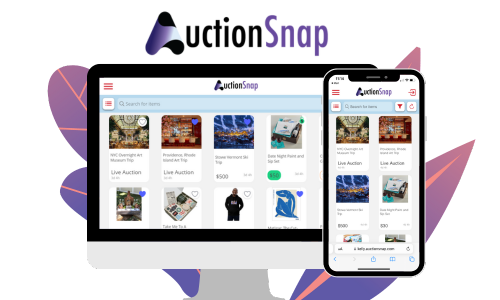
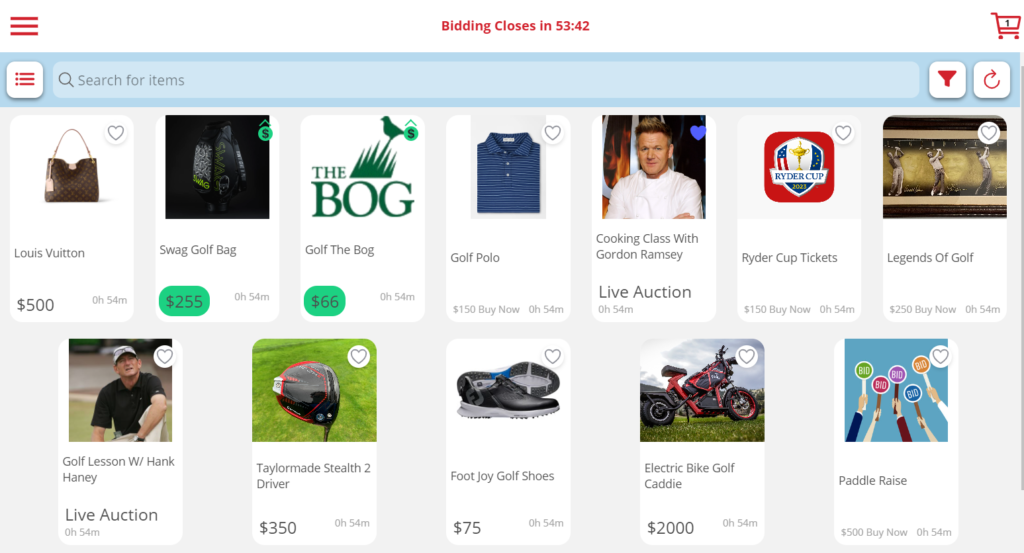
Using Auction Management Software like AuctionSnap will help you easily list all of your auction items online. You can easily upload item images, descriptions, and starting bids. They will all be beautifully displayed through a custom URL. Include this URL in all of your marketing channels before your event (email, social media, etc.)
You can keep bidding closed so guests can preview the items without placing bids before the event. This will allow your guests to take a look at the items ahead of time and help build up momentum for the auction. You also have greater flexibility with your auctions and, if you choose to do so, can open bidding early to help drive up higher bids at your event.
How do you keep guests engaged with your nonprofit auctions?
Because silent auctions are just that, silent, it can be easy for your guests to forget they are going on. In between all of the mingling, running up to a paper bid sheet can be distracting and your guests won’t want to constantly check if they are winning or not. They may lose interest, or become distracted and not be overly engaged with the silent auction.
AuctionSnap Solution: Mobile Bidding Right From Guest’s Phones
AuctionSnap’s mobile bidding feature allows guests to bid directly from their phones. Guests can mingle about the evening and receive alerts if they have been outbid. This takes the effort out of checking in on the bid sheets. Features like auto bid allow guests to set a max bid that will instantly outbid any new bidders. This helps drive up the overall amount of bids and ultimately will help your nonprofit raise more money at your events. By simplifying the bidding and making it more exciting, guests will automatically become more engaged with your auctions.
How do you streamline the checkout process at your nonprofit auctions?
One of the most common challenges faced during silent auctions is the unorganized and time-consuming checkout process. This can lead to lines at the end of the event and overall frustration for your staff and guests. You also might have to spend some time tracking down auction winners after your event if you offer invoicing later on.
AuctionSnap Solution: Mobile Checkout for a Smooth Post-Event Experience
AuctionSnap addresses this issue with its mobile checkout feature. This allows attendees to easily check out and pay for their items using their smartphones, significantly reducing wait times and streamlining the entire process. You can set up receipts to be automatically emailed to your guests, saving more administrative time post-event. This convenience not only improves the attendee experience but also reflects positively on your organization’s efficiency. For those less tech-savvy guests, nonprofits have the option for admin checkout ensuring everyone at every level is getting the service they appreciate.
What is the best way to record nonprofit auction transactions?
Managing and tracking auction winners and their items can be a process after a traditional event. You must match the items to the winners, invoice or receipt them, and create a tax letter if applicable. There are also manytax implicationswith running auctions and acknowledging your donors that you might need to keep your eye on.
AuctionSnap Solution: Automated Event Data Export (and integration with DonorSnap)
AuctionSnap will streamline all of your event transaction data post-event. Nonprofits will have the option to export the data to Excel for import into their CRM of choice. If you use DonorSnap as your nonprofit CRM, we integrate directly with them. All you have to do is connect your attendees to records in your database and the transactions will flow right to your CRM. From there you can generate the necessary acknowledgment letters, if you choose to do those, in addition to the automatic receipts that AuctionSnap will generate.
How do you reach more people and get better participation in your nonprofit auctions?
Traditional silent auctions are generally limited to the people who attend your event. You might have many more supporters who would participate in your auction, but can’t attend the actual event. This limits the fundraising potential of your silent auctions.
AuctionSnap Solution: Online Bidding Platform
Because AuctionSnap has a mobile bidding feature and everything is displayed online, nonprofits have the option for a hybrid auction. With a hybrid auction, guests can participate from a remote location at the same time guests at your live event are bidding. Because everything is updated in real-time, they will still have the experience and excitement of the competition of being in person for the auction. This model of auction expands the reach of the auction to a global audience, potentially increasing the number of bids and, consequently, the funds raised.
Final Thoughts
Running a successful nonprofit auction can come with a handful of challenges for nonprofits. From low engagement to the hassle of managing transactions, nonprofit auctions put a lot of strain on staff and volunteers. If managed well, a nonprofit auction can raise significant funds for your organization. Nonprofit Auction Management software like AuctionSnap can help nonprofits run more streamlined events. From simplifying the process of listing items and bidding to checking out, tools like AuctionSnap save nonprofits time and money. They also allow nonprofits of any size to pull off a fun and engaging event without the need for a huge budget or staff resources.
Disclaimer: Before implementing any tax-related practices, nonprofits are strongly advised to consult with a qualified tax professional. The following blog post provides a guide to assist in understanding best practices for tracking and acknowledging donations in nonprofit auctions and is not professional tax advice.
Nonprofit auctions are a great way for your nonprofit to expand their fundraising efforts. With the availability of online auction software like AuctionSnap, they’ve become more accessible and efficient.
When it comes to running an auction, many nonprofits are left wondering the best way to track, thank, and record the various donations that are involved. In this article, we will explore tax implications and acknowledgment best practices for your nonprofit auctions.
Should Nonprofits Provide a Tax Letter to Auction Winners?
It is always best practice to thank your donors for any support to your organization.
With a nonprofit auction management system like AuctionSnap you can automatically generate an email or printed receipt for your auction winners during your event. This should be sufficient for them to work with their accountant if they are looking to record it on their taxes.
However, your nonprofit may want to send an additional acknowledgment letter from your CRM system. This provides a more formal thank you for their participation in your event and will recognize their contribution.
Sample Acknowledgement Letter For Auction Item Winners:
Dear [Name],
We would like to extend our heartfelt gratitude for your generous support of [Nonprofit Organization] through your winning bid at our recent auction. Your contribution helps [briefly mention the cause or impact].
This letter is to confirm that you made a payment of $[Amount] for [Item/Experience] during the auction on [Date]. Please note that according to IRS regulations, the amount paid for auction items in excess of their fair market value may be tax-deductible. As such, we advise consulting with a tax professional for specific guidance on deductibility.
Thank you once again for your invaluable support.
Sincerely,
[Signature]
[Nonprofit Organization]
Are Auction Wins Tax Deductible?
While auction wins can be tax-deductible, it’s typically the amount paid in excess of the fair market value of the item that is eligible for deduction. For instance, if an item’s fair market value is $500 and the winning bid is $700, the $200 difference may be considered a charitable donation. Nevertheless, donors should seek professional advice to determine eligibility for tax deductions based on specific circumstances.
Do Nonprofits Have to Provide the Fair Market Value of Auction Items?
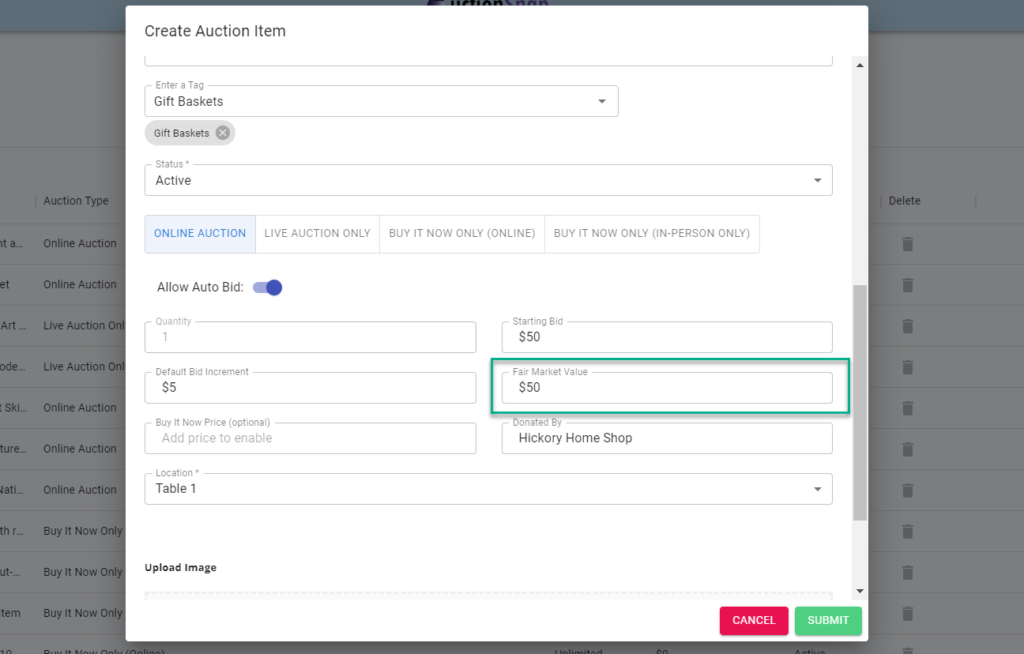
According to the IRS website, in order for an individual to claim a charitable contribution deduction for the excess of the purchase price paid, the donor must be able to show that he or she knew that the value of the item was less than the amount paid. Typically a nonprofit would provide a catalog of auction items that includes the fair market value. When cataloging your auction items in AuctionSnap, you have the option to add the fair market value to all of your auction items.
How to Thank Donors for Auction Items Donated
When an individual or organization donates items to be auctioned at your event, your nonprofit should treat them as in-kind donations. You should acknowledge their gift with a customized thank you letter for in-kind donations. The letter should include details of what the in-kind donation was and if any goods or services were exchanged for it. It is up to the donor of the gift to determine the fair market value of the item donated with their accountant. Therefore, you do not need to provide the fair market value of the item donated in the acknowledgment letter.
Sample Acknowledgement Letter For Auction Item Donors:
Dear [Name],
Thank you so much for your generous donation of [Item/Experience] for our recent auction. Your contribution directly supports our mission to [briefly mention the cause or impact]. No goods or services were provided in exchange for your gift.
Your support plays a significant role in our ability to make a difference. We are immensely grateful for your dedication to our cause.
Thank you for being an integral part of our efforts.
Warm regards,
[Signature]
[Nonprofit Organization]
Final Thoughts
When it comes to acknowledging donors for their participation and contributions to your auctions, it is important to have a customized thank-you process. Your auction management systems like AuctionSnap can provide a necessary receipt to auction winners. However, it is best practice to send a formal acknowledgment letter from your nonprofit CRM. If you use DonorSnap with AuctionSnap you can set up these parameters ahead of time for a streamlined post-event acknowledgement process. Learn more about how AuctionSnap and DonorSnap work together here.
Always check with your tax advisor for your organization’s specific policies.
Adding a Paddle Raise (aka Fund-a-Need) to your next nonprofit event is an engaging and inspiring way to raise more funds for your cause. A Paddle Raise occurs during fundraising events as part of the live auction. The objective is to raise the bulk of your event’s donations, which can be unrestricted or designated for a particular cause or program within your nonprofit organization.
Paddle raises have been shown to raise the most amount of money for the least amount of work at nonprofit auctions, making them a valuable addition to your upcoming event.
Keep reading to discover how this popular trend in fundraising events can help your nonprofit connect with supporters and raise more funds for your cause.
What is a Paddle Raise or Fund-a-Need?
Paddle raises are rising in popularity at nonprofit events. They serve as an interactive and emotionally compelling addition to fundraising auctions. Unlike traditional auctions, where participants bid on tangible items, the paddle raise focuses on inspiring donors to contribute monetary donations at various levels.
How Does a Paddle Raise Work?
A paddle raise will take place during the live portion of a fundraising auction. Many nonprofits will incorporate powerful storytelling into this segment of the evening to help drive more paddle raises. Generally, an auctioneer or emcee will guide a narrative that taps into the guest’s emotions and shares with them the benefits of their support. As the host moves through the narrative, guests will be asked to raise their paddles at various levels of support. In turn, this leads to a feeling of inclusiveness within the organization and creates a team-like mentality.
The Benefits of Incorporating Paddle Raises
What makes paddle raises so successful is the emotional connection they create with your audience. It also taps into a segment of your audience who may not be interested in winning auction items but still wants to provide additional support to your cause. Below are some of the additional benefits of adding a paddle raise to your event.
1. Engages Donors
Paddle raises allow nonprofits to establish an emotional connection between their cause and the donors. The storytelling element helps inspire empathy and gets donors in the spirit of giving. In addition, paddle raises provide an interactive platform for donors to actively engage with the cause, making them feel like valued stakeholders in the organization’s mission.
2. Offers Additional Immediate Impact
Unlike traditional auctions where there is one winner for one item, paddle raises can have multiple “winners” at each giving level. They also generate immediate funds and require less work to process than a traditional auction. This allows nonprofits to respond to urgent needs promptly and efficiently. Through AuctionSnap, donors who bid specific amounts can add their donation right to their cart. Upon check out at the close of the evening the funds will be enroute to your nonprofit’s bank account.
3. Makes Participation Accessible
Your paddle raise should engage a wide range of donors, from those who can give large amounts to those who contribute smaller donations. It fosters an inclusive environment where everyone can play a part in making a difference. Make sure your nonprofit offers a good range of giving opportunities at your paddle raise so everyone can participate.
When Should the Paddle Raise Take Place?
The paddle raise should take place at the arc of your event when the energy is high. According to The Gala Team, simply moving your paddle raiser earlier in the program can yield a 10% to 20% increase in funds raised. If you have it too early in the evening your guests are not properly primed and warmed up to participate. If you wait for too late in the evening, guests will be tired and ready to go home. Aim to have the paddle raise right in the middle of the event when guests are engaged and ready to give.
Should Your Paddle Raise Focus on Unrestricted Funds?
When your organization is planning your paddle raise, you might be wondering if you should have the funds restricted or unrestricted. Ultimately, choose what is best for your organization. If someone is attending your event, they are most likely invested in your cause and will give no matter what.
One best practice is to offer specific tangible impacts of each giving level. This will help improve participation and engagement, without restricting your funds. For example, for $500, you will provide [specific tangible impact, e.g., sponsor educational materials and supplies for a classroom, aiding the learning experience for students and enhancing the educational program’s effectiveness].
Best Practices for a Successful Paddle Raise
Set Goals for What You Want to Raise at Each Level
Prior to your event, you should set a realistic goal for how much you should raise at each level. If you have done them in the past you will have a good starting point. Having a specific number can help rally up the crowd, people love to work towards a common goal. Aim for approximately 5-7 giving levels. Begin with the highest giving level, for instance, $10,000, and the lowest giving level, for example, $100. Then, set donation levels in between these two points.
Hire a Professional Emcee or Auctioneer
Hiring a professional auctioneer who is an expert at getting the crowd going is one of the best things you can do to have a successful auction. These professionals know how to get a crowd going and tug on heartstrings. You also want someone who isn’t afraid to put people on the spot for a little healthy peer pressure to get more donations coming in. They will also help guide the narrative of the evening in a thoughtful and effective way.
Your Excitement is Absolutely Essential
Put yourself in the shoes of a guest for a moment. Look around the room and imagine the staff prior to and during the paddle raise. Are they showing any signs of excitement? Are you excited to make a large donation if the staff members around you are uninterested or the emcee is asking for donations apologetically?
Now imagine a paddle raise with an actively engaged staff strategically placed throughout the room that is obviously excited. They understand that a successful paddle raise could open doors that make a real impact. They are making eye contact with you and chipping in with their own verbal appeals. That excitement is contagious and encourages donors to give even more generously. Come ready to show your excitement in order to take your paddle raise to the next level.
Secure Major Support Ahead of Your Event
Nothing can bring down the energy of a paddle raise quite like low participation. Prior to your event, connect with major donors/board members who you anticipate will give at certain levels. Secure their support ahead of the event, so you know at each giving level you will have at least one raise. This will help bring up the energy of the evening and ultimately lead to more participation. Board members should be reminded that they can raise their paddles multiple times to increase peer pressure and participation.
Secure a Matching Donor
Securing a matching donor for your fundraising event can significantly boost the amount of money raised during your paddle raise. When a donor pledges to match the funds raised during a specific portion of the event, it creates a sense of urgency and excitement among your supporters. Knowing that their donations will be matched dollar-for-dollar motivates donors to contribute more generously, amplifying the impact of their contributions. Incorporating a well-known figure from your organization as the matching donor can enhance the credibility and trustworthiness of the match. It also can add an element of excitement and perhaps competitiveness that will increase donations even more.
Utilize an Auction Management Tool to Simplify the Process
Nonprofit auction management tools like AuctionSnap help nonprofits streamline their auctions. With a paddle raise, you have a lot of moving parts to manage since you will (hopefully) be receiving lots of donations at varying levels. Tools like AuctionSnap will make it easy for you to enter bids and will simplify the checkout process for your guests. The more streamlined you can make your auction, the happier your participants will be. Learn more about how AuctionSnap works here.
How to Run a Paddle Raise in AuctionSnap
Step 1: Choose Your Paddle Raise Setup
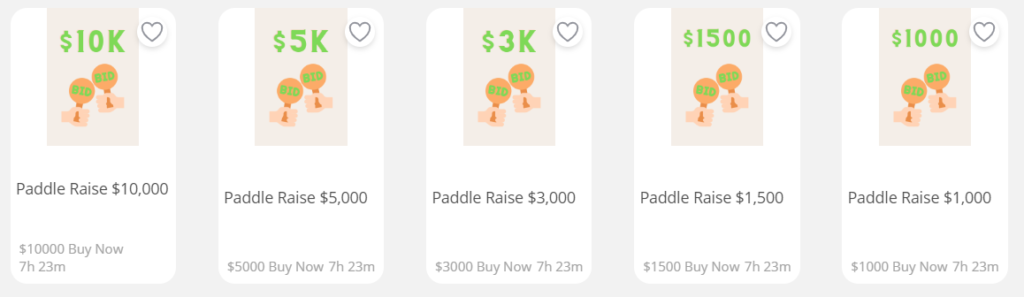
In AuctionSnap, paddle raises are set up as “Buy It Now” items, either for online or in-person options. Your choice depends on whether you want participants to enter their own paddle raise amounts or have an admin manage the process.
Participant Entry: If you want participants to input their own paddle raise amounts, create a “Buy It Now Only (Online)” item for each paddle amount. Participants can then add these items to their cart. Admins will also be able to add these items to participants’ carts during the live event using the “Manual Bid Entry” page.
Admin Only Entry: If you want paddle raises hidden from participants’ view, set them up as “Buy It Now Only (In-Person Only)” items. This ensures the paddle raise amounts are only visible and accessible during the live event.
Step 2: Executing the Live Paddle Raise
Follow these steps to add paddle raises to a participant’s cart for checkout using the AuctionSnap platform:
For Participant Entry: After you complete each segment, instruct guests who have raised their paddles to add the buy-it-now item at the appropriate amount to their cart.
For Admin Entry: During your event have someone record the raised amounts. Log into AuctionSnap and navigate to the “Manual Bid Entry” page. Locate the “Buy It Now” items you’ve set up for paddle raises. Input the raised amounts manually based on the recorded values.
Step 3: Checkout
Regardless of the entry method you choose, participants can then proceed to check out using their mobile devices or opt for a traditional admin checkout line, based on your setup preference.
Pro tip: Direct as many people as possible to check out from their own phone. It will make what was previously the most stressful and tedious part of your event a painless instant!
Final Thoughts
The paddle raise, or Fund-a-Need, is a powerful fundraising tool nonprofits can use at their fundraising events. By harnessing the collective generosity of donors, organizations can raise more at their nonprofit auctions. They provide an opportunity for an exciting component to your evening that will secure additional funds for your organization. With the help of a tool like AuctionSnap, your next paddle raise will run smoothly and help you further your mission.